
Why Shaligram is Worshipped as Lord Vishnu ?
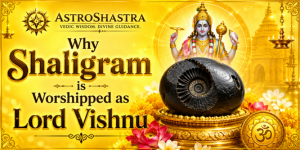
Unlike man-made idols, Shaligram is worshipped in its natural form and holds immense importance in Vaishnav traditions. It is commonly kept in temples and homes for blessings, peace, prosperity, and spiritual growth.
Let us understand why Shaligram is worshipped as Lord Vishnu and what makes it so sacred.
What is Shaligram?
Shaligram is a sacred black stone found mainly in the Gandaki River of Nepal. These stones contain natural chakra-like markings and unique symbols that are believed to represent different forms of Lord Vishnu.
According to Hindu scriptures, Shaligram is not an ordinary stone. It is regarded as a self-manifested divine form of Vishnu that carries strong spiritual vibrations.
The stone is usually black, smooth, and round with natural spiral impressions formed over millions of years.
Mythological Story Behind Shaligram
The worship of Shaligram is deeply connected to ancient Hindu mythology.
According to legends, Goddess Tulsi cursed Lord Vishnu to become a stone after a divine incident involving devotion and sacrifice. Accepting the curse, Lord Vishnu manifested himself as Shaligram in the Gandaki River.
Because of this sacred connection:
- Tulsi leaves are always offered during Shaligram worship
- Worship of Vishnu is considered incomplete without Tulsi
- Shaligram and Tulsi together symbolize divine unity
This mythological story is one of the main reasons why Shaligram is worshipped as Lord Vishnu.
Why Shaligram is Considered the Form of Vishnu
1. Self-Manifested Divine Form
Hindu scriptures describe Shaligram as a Swayambhu form, meaning self-created or naturally manifested. Unlike idols carved by humans, Shaligram appears naturally and is therefore considered extremely sacred.
Devotees believe Lord Vishnu resides permanently within the Shaligram stone.
2. Presence of Vishnu Symbols
Many Shaligrams contain natural chakra markings that resemble:
- Sudarshan Chakra
- Conch shell
- Lotus patterns
- Divine symbols associated with Vishnu
These sacred signs strengthen the belief that Shaligram is a living representation of Lord Vishnu.
3. Mention in Ancient Scriptures
Several Hindu scriptures praise the greatness of Shaligram, including:
- Padma Purana
- Skanda Purana
- Vishnu Purana
- Garuda Purana
These texts state that worshipping Shaligram gives spiritual merit equal to visiting holy pilgrimages and performing elaborate rituals.
4. Powerful Spiritual Energy
Shaligram is believed to radiate positive spiritual vibrations. Worshippers believe it helps:
- Remove negative energy
- Bring peace and harmony
- Improve prosperity
- Increase devotion and spiritual awareness
- Protect the home from negativity
Because it represents Vishnu, the preserver of the universe, Shaligram is associated with balance, protection, and divine blessings.
Types of Shaligram and Vishnu Forms
Different types of Shaligrams are believed to represent different avatars and forms of Lord Vishnu, such as:
- Narayan Shaligram
- Lakshmi Narayan Shaligram
- Sudarshan Shaligram
- Varaha Shaligram
- Narasimha Shaligram
- Krishna Shaligram
Each type has unique markings and spiritual significance.
Benefits of Worshipping Shaligram
Spiritual Benefits
- Enhances devotion toward Lord Vishnu
- Creates a peaceful spiritual atmosphere
- Helps in meditation and inner purity
- Removes karmic negativity
Family and Home Benefits
Devotees believe Shaligram worship brings:
- Prosperity and abundance
- Harmony in relationships
- Protection from negative energies
- Blessings for health and success
Religious Importance
According to Hindu beliefs:
- Worshipping Shaligram is equal to worshipping Vishnu directly
- Daily worship brings punya (spiritual merit)
- It is especially auspicious for Vaishnav devotees
Rules for Keeping Shaligram at Home
Since Shaligram is considered a living form of Vishnu, devotees follow certain rules:
- Keep it in a clean and sacred place
- Offer Tulsi leaves daily
- Perform regular prayers or Vishnu mantras
- Avoid placing it in impure surroundings
- Maintain cleanliness and devotion during worship
Even simple prayers offered with sincerity are believed to please Lord Vishnu.
Shaligram and Tulsi Connection
The bond between Tulsi and Shaligram is considered highly sacred. Tulsi leaves are essential in Vishnu worship because Tulsi is believed to be deeply beloved by Lord Vishnu.
Offering Tulsi to Shaligram symbolizes:
- Purity
- Devotion
- Divine love
- Spiritual surrender
Many devotees never worship Shaligram without Tulsi leaves.
Scientific View of Shaligram
From a scientific perspective, Shaligram stones are ancient ammonite fossils formed millions of years ago. These fossils developed naturally under geological processes in the Himalayan region.
However, beyond scientific explanation, millions of devotees worship Shaligram for its spiritual and religious significance.
Shaligram is worshipped as Lord Vishnu because it is believed to be his direct divine manifestation on Earth. Its sacred origin, natural divine symbols, scriptural importance, and powerful spiritual energy make it one of the holiest objects in Hindu worship.
For devotees, Shaligram is not merely a stone but a living presence of Lord Vishnu that brings protection, peace, prosperity, and spiritual upliftment.
With sincere devotion, regular worship, and purity of heart, Shaligram worship is believed to attract divine blessings and deepen one’s connection with Lord Vishnu.
Comments